

If you follow this Road Map you will succeed

1 -
If you or some one with you want to sing and basically accompany yourself and have fun on guitar, you only need a few basic chords most of the time, BUT you need to be able to play in a Key that is easy for your voice, so how do we do this?

NOTE:
If you need to find any chord there are several chord books and diagrams, use the links below to find them
A -
B -
C -

Road Map Pg2
If you have finished and mastered all from page 1 then it is time to carry on
Lets look at an example
I am going to use the song ‘Knocking On Heavens Door’
If you are unfamiliar with this song look on YouTube
For this example I am using the Key of G
Chords for song are
G -
Basically that is all there is to it, the chords are repeated for the whole song. Now this chord progression is a I -
I -
If singing in the Key of G is OK for your voice, great, but if it is a little bit too low and you need to sing a bit higher what do you do?
You have basically two choices
Choice 1 -
G -
But now the song is in the Key of A not G Because you are playing two frets up the neck
Choice 2 -
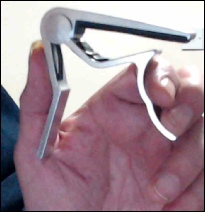
*See Pictures 1 and 2 for example of types of Capos
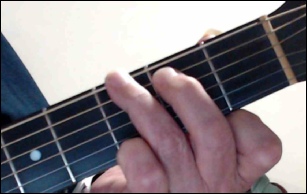
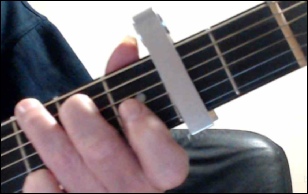
See Pictures 3, 4, 5 for example of a Capo on the Guitar and using the G chord shape you already know but changing the Key/pitch up higher for singing

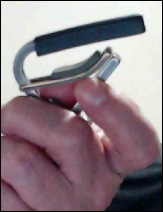
Picture 1
Picture 2
There are many different types of Capos, here are just two examples, do a Google search to find out more about Capos if you need
appsforguitar.com/
appsforguitar.com/
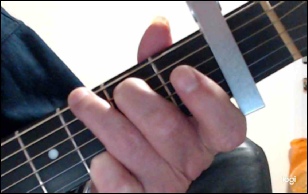
Picture 3 Key of G
Picture 4 Key of G#/Ab
Picture 5 Key of A
G Chord with No Capo
Means when you strum the chord it will be the chord of G
G Chord with the Capo on the 1st fret
Means when you strum the chord it will be the chord of G#/Ab
G Chord with the Capo on the 2nd fret
Means when you strum the chord it will be the chord of A
So by using the chords G -
If the Key is too low just put a Capo on and you can use exactly the same chords but the pitch/Key will be a bit higher
What is a I -
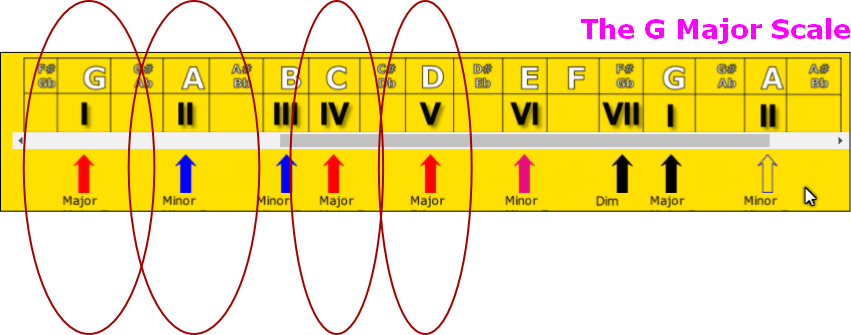
All this means is that each Key has 7 notes and each note can be a Chord. See picture below of the G Major Scale
The 1st note in the scale is G so this can be a G Major chord
The 2nd note is A so this can be an A minor chord
The 4th note is C so this can be a C Major chord
The 5th note is D so this can be a D Major chord

So that is our chord progression in the Key of G:
G -
NEXT

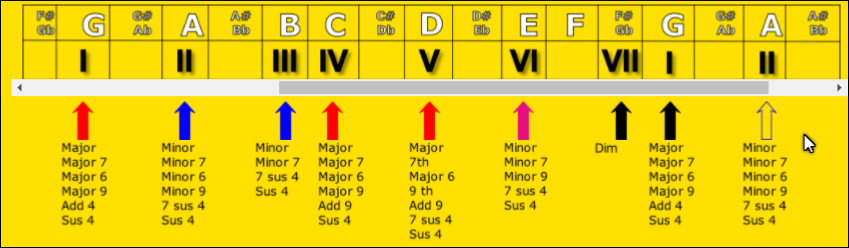
Now these are not the only chords you could use in the Key of G There are many more. For example if you wanted to experiment and make things up for your self, see the Diagram below
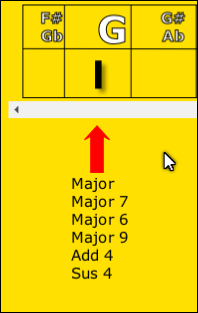

In the Key of G:
Your 1st chord could be a
G Major 7 or
G Major 6 or
G Major 9 etc…
In the Key of G:
Your 3rd chord could be a
B Minor or
B minor 7 or
B7 Sus 4 etc…

BACK


https://musicsliderule.com/ Copyright © G.N.E.B.